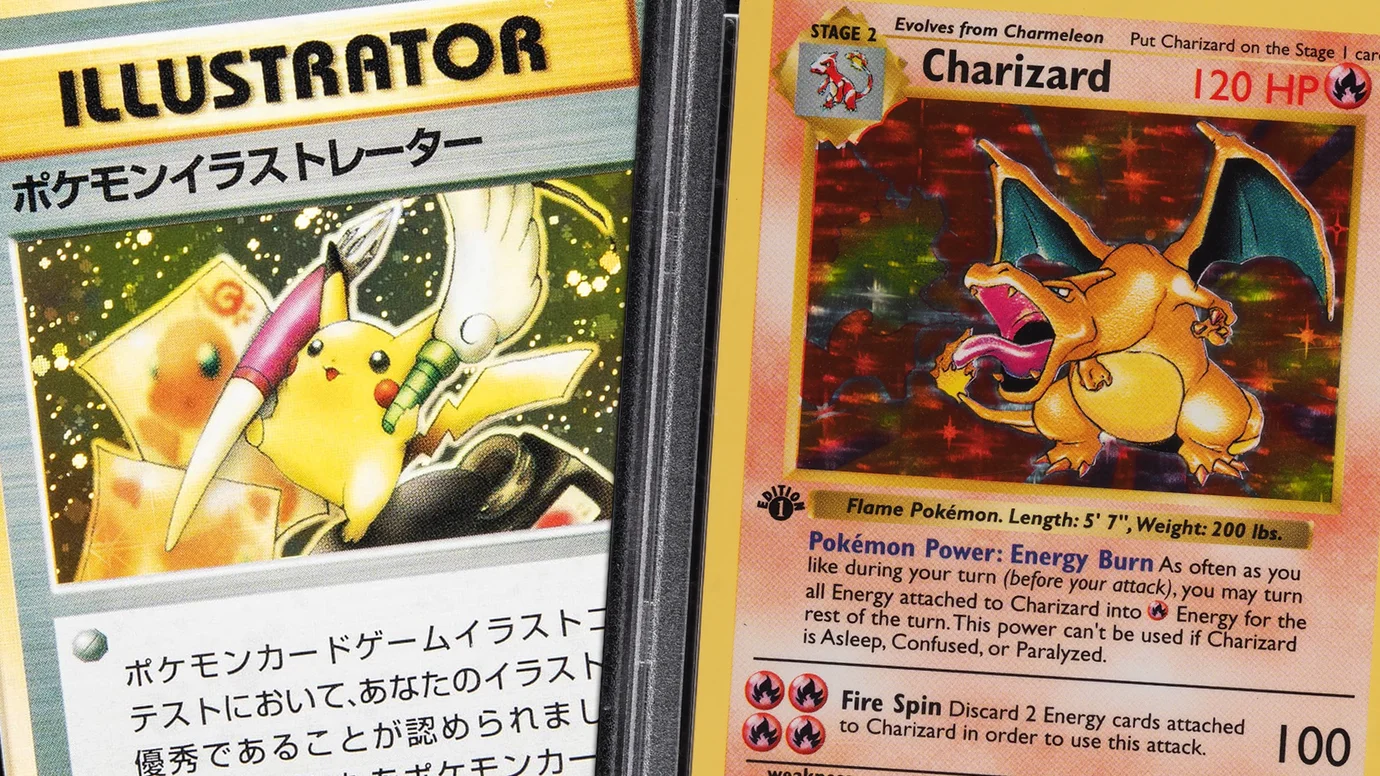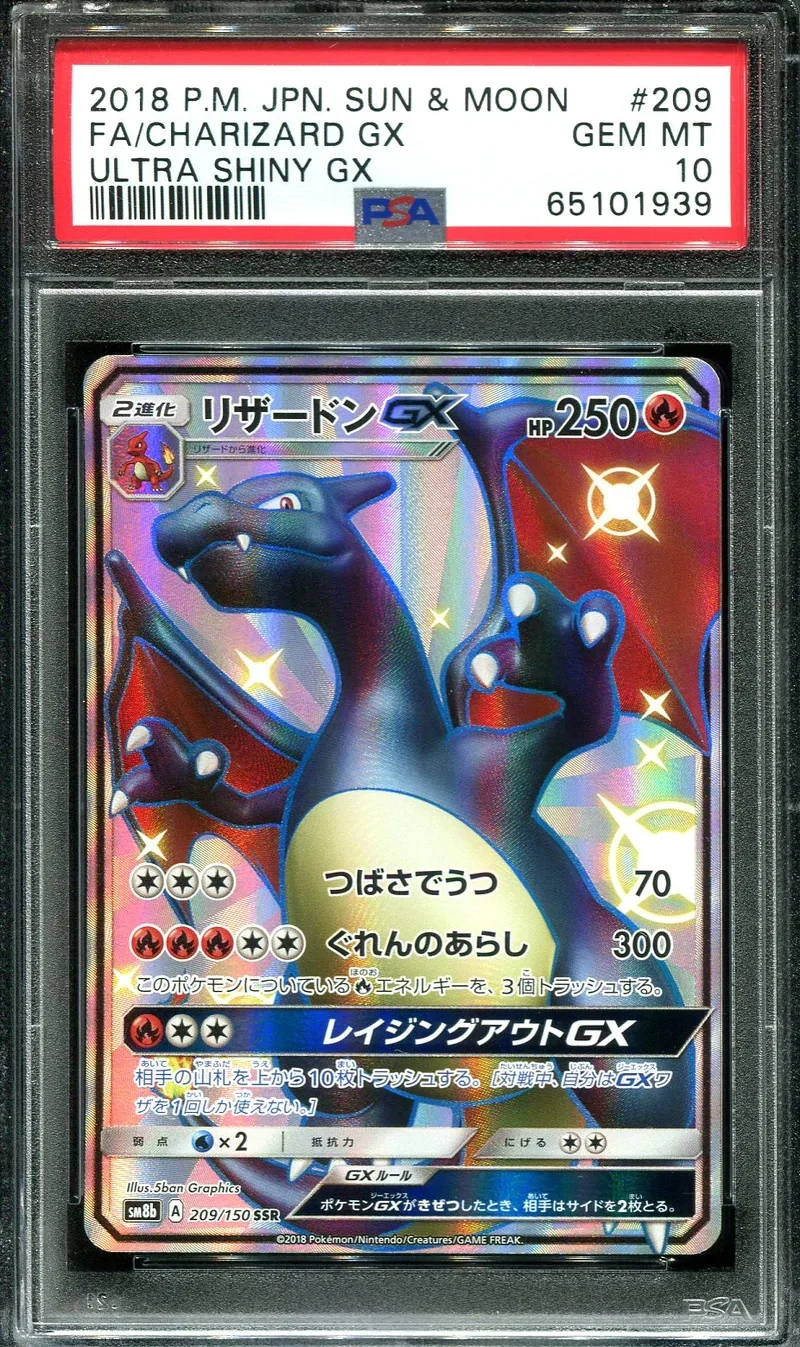
You can tell if a Pokémon card is fake by comparing it side by side with a genuine copy or an official scan, then checking the text, numbers, print quality, back design, foil and card stock for differences. Most fakes fail at least one of these checks within a minute or two, often on something as basic as a misspelled name or an impossible HP value. For expensive cards, treat at-home tests as a first filter and get an expert or professional authentication before you pay.
The sections below walk through each check in the order that catches fakes fastest, then answer the questions people usually ask next: what foil means, whether silver cards are real, and whether a fake card has any value.
Start with a genuine card to compare against
Every reliable test depends on one thing: a known-real reference. Wargamer calls this the most important requirement for all authenticity checks, because you need to know exactly what the real card looks and feels like before you can spot a subtle difference in material or a fault in the holographic foil1.
You have two kinds of reference:
- A physical authentic copy. This is ideal. It lets you compare stock thickness, texture, foil behavior and color shade directly.
- An official scan. For design and printing checks, a scan from Pokémon's official card database is enough. It shows you which words, numbers and symbols should appear and where1.
wikiHow lists several databases you can use for the same purpose, including Pokemon.com, Serebii.net, Bulbapedia and Pkmncards.com. It suggests checking the illustration, text, border color and size, set symbol, set number, HP value, attack values, energy symbols, and weaknesses and resistances against the official image2.
Keep expectations realistic. Wargamer warns that no at-home test gives the same confidence as advice from a TCG dealer, and that the quality of fakes keeps improving. A combination of the tests below should still weed out all but the highest-quality counterfeits1.
Check the name, numbers and stats first
It sounds too obvious, but text errors are one of the most common giveaways. Some counterfeiters take care to copy cards closely. Others mass-produce obvious forgeries and rely on selling them before anyone notices. That is why Wargamer recommends testing for the simplest mistakes first1.
Names and spelling
A misspelled Pokémon name is an immediate red flag. Look closely at "Pokémon" itself: a missing accent on the "e" is a major warning sign1. wikiHow adds other common slips, such as misspelling Nintendo, misspelled attack names, and missing periods or commas2. Hall of Cards notes that typos are extremely unusual on genuine cards because of the proofreading they go through3.
Also check that the art matches the text. wikiHow gives the example of a Pikachu card showing a Sandshrew, or a Shedinja card with text about Milotic. Some fakes even show creatures that are not Pokémon at all, such as Digimon characters2.
HP and damage values
Fakes often carry huge numbers. wikiHow treats HP or attack values over 500 as a sign of a fake, and states that the highest HP in the game at the time of writing is 340 and the highest attack value is 3002. Newer sets can change these limits, so treat them as a guide and confirm against the official scan.
Check the order, too. Genuine cards print "HP 60", with the number after the letters. A card reading "60 HP" is likely fake, although wikiHow notes a few documented genuine misprints have this reversed2.
Collector numbers, rarity and the small print
Look for the collector and set numbers: two three-digit numbers divided by a slash, in the bottom left or right corner. Rarity symbols have changed over the years, so compare them with your reference card1. wikiHow adds a few rule-based checks: weakness or resistance modifiers top out at +/-40 unless the weakness is x2, retreat cost is no more than 4, and attacks should have energy symbols listed. Fakes also often leave out the copyright date or illustrator credit at the bottom2.
Inspect fonts, print quality and symbols on the front
If the text is right, move on to how it is printed.
Fonts and sharpness
wikiHow's reviewing expert says fakes often use a slightly different font that is thinner or bolder than on real cards, and that text may be slightly larger or smaller2. Wargamer advises checking fonts across the whole card, not just the large type, because fakes may mix fonts in different spots. It singles out the small text near the bottom: if it is noticeably blurrier than on a genuine card, that is a strong sign of a fake1.
Hall of Cards describes authentic printing as crisp, with sharp detail, while pixelated, blurry or washed-out images point to low-quality printing3.
Color
Colors that are faded, smudged, bleeding together, too dark, too light or simply wrong suggest a fake2. One exception: a Pokémon shown in unusual colors may be a shiny variant, which is a genuine rare card. Check everything else before deciding2.
Energy, weakness and retreat symbols
On fakes, the small circular energy symbols are often the wrong size, design or position. Typically the colored circle, the symbol on top, or both are printed too large, and they may not line up with the text below1. Check weakness, resistance and retreat cost the same way: correct symbols, correct size, correct place2.
Borders
Hall of Cards suggests inspecting the yellow borders, since fakes may have larger or inconsistent borders3. Your Playmat also points to borders, saying genuine cards have clean, crisp edges while fuzzy or pixelated borders indicate a fake4.
Real vs fake Pokémon card backs, and how the card should feel
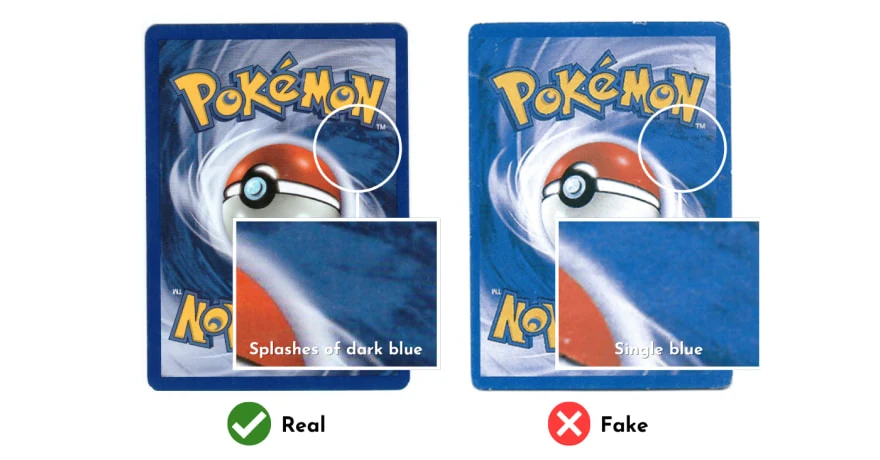
The back is often the fastest place to catch a fake. Hall of Cards says counterfeits almost always get the Poké Ball coloring or the surrounding blue swirl wrong, because the real gradients are hard to reproduce3. wikiHow lists the wrong shade of blue as one of its main warning signs2. Lay your card next to a genuine one in daylight and compare the blue directly; a scan on a screen can shift colors.
Tests you can do without ripping the card
Hall of Cards describes a quick check in three parts3:
- Light test. Hold the card up to a bright light. Genuine cards have a thin dark layer between two white layers, so little light passes through. Many fakes are easy to see through.
- Back inspection. Look at the Poké Ball and blue swirl pattern described above.
- Bend test. Bend the card gently. If it flexes like paper, it is likely fake. Real cards resist slightly because of their layered build.
Be gentle with the bend test. Any bend risks creasing a genuine card and lowering its value, so only flex it slightly, and skip this on a card you hope to grade.
Texture and stock
wikiHow lists a thin, flimsy feel among the common signs of a fake2. Hall of Cards adds that many genuine special or rare cards have grainy, patterned or fingerprint-like textures that are expensive to copy, while fakes often feel too smooth or waxy3.
Claims to treat with caution
Your Playmat suggests checking a "Card Registration Number" on every card's back against the PSA/DNA website, looking for a raised Pikachu watermark when held to light, and looking for a holofoil stamp in the bottom right corner of all authentic cards4. None of the other sources here describe these features, so don't reject a card on these tests alone. Rely on the checks that multiple sources agree on.
What foil means, and whether silver cards are real
A foil card in Pokémon is one printed with a holographic, reflective layer that shines and shifts as the light hits it. Because foil cards are often the rarer and more valuable ones, they are common targets, and the foil itself is a useful test.
How genuine foil behaves
Hall of Cards says authentic holo patterns have depth and move cleanly when you tilt the card, with an even shine and no color bleeding. Fakes tend to show a cheap-looking effect, uneven shine or bleeding colors3. wikiHow adds that genuine holographic foiling has a texture you can feel, runs in one direction without crossing itself, and catches the light brightly. A holo card that feels smooth or looks dull is probably fake2.
Wargamer recommends comparing foil against a physical authentic copy where possible, since faults in the holographic foil are much easier to see side by side1.
Are silver Pokémon cards real or fake?
A silver or shiny-looking card is not fake by default. Many genuine cards use foil and special textures. The color alone tells you nothing; what matters is whether the card matches a verified copy. Apply the same tests: does the shine move cleanly and evenly when tilted, does the surface have the expected texture rather than a smooth or waxy feel, and do the text, numbers and back pass inspection3. Look up the exact card in an official database first. If no genuine version with that look exists, that is your answer1.
Misprints, packs and where fakes turn up
Don't mistake a misprint for a fake
Genuine cards sometimes carry printing errors. wikiHow says these are very uncommon and well documented, so search for your card to see whether others report the same error2. Wargamer includes checking for known misprints as a step in its own process1. Your Playmat makes the same point: search the card and read player forums before discarding it, because a documented error card could be worth money4.
The rule of thumb: a single odd detail that matches a documented misprint is promising. Several unrelated errors on one card almost always means a fake.
Spotting fake booster packs
Hall of Cards lists these warning signs for packs3:
- Spelling or letter-spacing errors in the text on the foil wrapper
- Wrong shades of blue and orange on the cards
- Too much air inside the sealed wrapper
- A price dramatically below retail
Where fakes are common
Hall of Cards cites official Pokémon sources as saying the highest reported counterfeit sales come from flea markets. It also urges caution with unofficial online marketplaces, eBay sellers with no feedback, and social media deals that look too good to be true3. For help with a doubtful card, wikiHow suggests asking experienced collectors, for example in the r/PokemonTCG subreddit2.
Wargamer also suggests that if you are new to collecting, buying high-value singles is not the ideal place to start, since opening packs from sealed product carries less risk1.
Are fake Pokémon cards worth anything?
No, not as collectibles. wikiHow states that fake cards are not allowed in official play and are worthless on the resale market2. Hall of Cards puts it the same way: buying a counterfeit means losing your money entirely, because fakes have zero resale value and cannot be used in official tournaments3.
Selling one also carries risk. Your Playmat warns that selling counterfeit cards can lead to legal trouble, since companies take counterfeiting seriously4.
What about the $5.275 million Pokémon card?
That figure is linked to a record-level price for a single rare card, the kind of headline that shows how much top cards can sell for. For authentication, the takeaway is that value drives counterfeiting. Hall of Cards notes that the most valuable cards are the most often faked, while cards worth under $1 are rarely copied3. Wargamer likewise links the boom in fakes to top cards selling for serious money1. Be most careful with exactly the cards you most want.
When to get professional authentication
For cards worth hundreds or thousands, Hall of Cards points to professional authentication from companies such as PSA, BGS and CGC, and gives a rough cost of $12 to $25 or more per card for grading3. Wargamer also recommends an expert's opinion before spending serious cash1.
If you want a quick check before paying for professional grading or buying a card, mobile tools can scan photos to compare lettering, numbers, print patterns, and foil against known real cards. Buddy also estimates the odds of each grade from PSA, CGC, Beckett, TAG and SGC and shows pricing based on real sales; these are estimates, not official grades, and do not replace professional authentication for a high-value card.