
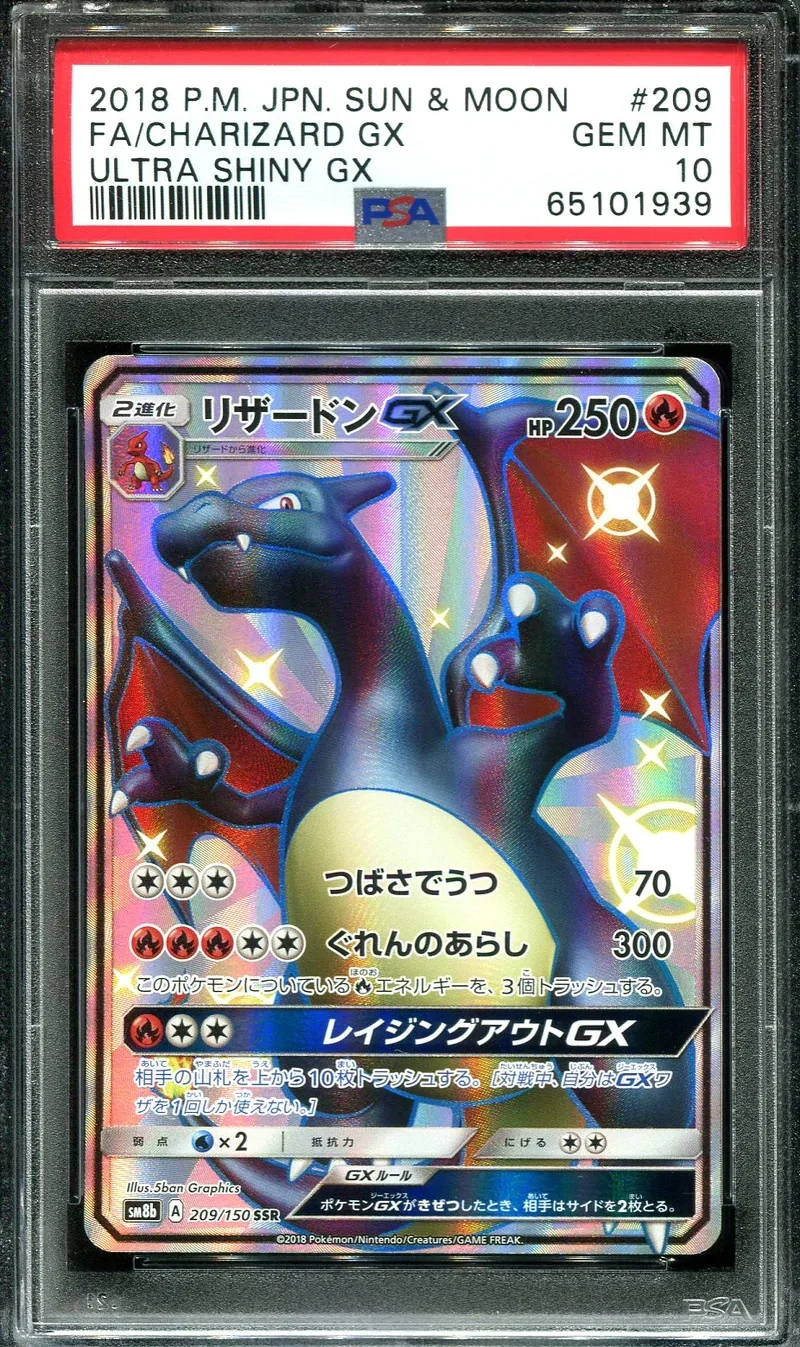
PSA's cheapest open tier costs $39.99 per card as of October 30, 2026, with an estimated 90 to 100 business days of turnaround1. Faster tiers run $59.99, $79.99 and $199 per card. Shipping, insurance, possible upcharges and selling fees come on top. Your real cost per card is higher than the sticker price.
This guide covers PSA, because that is where the retained pricing evidence sits. Beckett (BGS), CGC and TAG publish their own fee schedules. Check those pages directly before you compare, since prices at every company change often.
PSA grading prices by service tier
PSA listed these lower tiers on its grading page on October 30, 20261:
| Tier | Price per card | Max insured value | Estimated turnaround |
|---|---|---|---|
| Value | $39.99 | $500 | 90 to 100 business days |
| Standard | $59.99 | $1,000 | 70 to 80 business days |
| Priority | $79.99 | $1,500 | 50 to 60 business days |
| Express | $199 | $2,500 | 20 to 30 business days |
Pricier tiers sit above Express. The Value tier reopened on October 29, 2026. It cost $32.99 before a June pause1.
Some cheaper options are not currently available. Value Bulk is paused, and PSA's October 28 announcement did not mention Value Plus or Value Max. The Collectors Club starts at $149 a year, with Premium at $199. Its Bulk Access was marked temporarily paused, so a membership does not open a cheaper tier right now. You do not need a paid membership for an ordinary submission, per PSA's FAQ1.
PSA states that turnaround times are estimates, not guarantees. Plan for the longer end of each window.
Prices through a submission center
Authorized dealers and submission centers set their own rates. One center, SMR Collectibles, lists Value at $25 (65 business days), Value Plus at $40, Regular at $75, Express at $150 and Super Express at $2752. It also lists a Value Bulk option at $19 with a 20-card minimum and a TCG Bulk Special at $16, also with a 20-card minimum. Each tier carries a max declared value, from $199 for TCG Bulk up to $4,999 for Super Express.
These figures differ from PSA's own October 2026 page, and some list tiers PSA has paused. Treat any third-party table as a snapshot. Confirm the current rate and service availability with the center before you ship.
Costs that stack on top of the grading fee
The tier price is the easy part. Budget for these extras on every submission1:
- Shipping both ways, plus penny sleeves, semi-rigid holders and packing supplies.
- Inbound insurance. PSA does not insure packages on the way in, per its coverage page. You arrange that yourself.
- Tier upcharges. If PSA decides a card's graded value exceeds your tier's limit, it moves the card up and bills the difference.
- Selling fees, usually a percentage of the final sale price if you plan to sell.
In a small batch, the same source estimates about $10 per card for shipping and supplies1. That turns a $39.99 Value submission into roughly $50 per card before any selling fee. Submission centers add their own paperwork rules. SMR, for example, requires a separate itemized list for each service level2.
Upcharges are the cost people forget. Declare values honestly and pick a tier whose insured limit fits the card's likely graded value.
Working out whether a card earns back its cost
Compare two numbers: what you would net selling the card raw, and what you expect to net after grading. One worked example uses illustrative numbers for a modern card worth $60 raw1:
- Sell raw: $60 minus about 13% in fees nets about $52.
- Estimate grades across 10 copies: 3 at PSA 10 ($180), 5 at PSA 9 ($75), 2 at PSA 8 ($50).
- Average sale price: $101.50. After 13% fees, about $88.
- Subtract $39.99 grading and about $10 for shipping and supplies. You keep about $38.
That is about $14 worse than selling raw, even though the PSA 10 is worth three times the raw price. Shift the odds to 6 tens, 3 nines and 1 eight, and the average beats raw by about $16. But a single card lands on one grade. In that example a 10 nets about $107, a 9 about $15, and an 8 loses about $61.
A practical rule from the same source: grade when the math still works if the card comes back a 9. If it only works at a 10, keep it raw. A $39.99 fee on a $20 common card almost never comes back.
Is a PSA 10 hard to get, and does 60/40 centering still qualify
Yes, a PSA 10 is hard to get. It is the grade that pays and the one you are least likely to receive1. A pack-fresh card is not a sure 10. Factory defects exist before the wrapper comes off: off-centering, print lines, edge whitening, soft corners and roller marks.
The gap between a 9 and a 10 is often a border difference most people cannot see by eye. PSA's published grading standards set out how strict the top grades are, including the centering tolerances for each grade1. If you are asking whether a 60/40 card can still reach a 10, read the current centering figures in PSA's standards rather than relying on forum shorthand. Check both the front and the back. Strong centering on both sides is one of the signs of a card worth submitting.
Before you pay any fee, inspect like a grader. Use a 10x loupe and angle the card under bright light. Assume it is a 9 and hunt for the one flaw that proves it. An AI grader app can give you a rough estimate of centering and surface issues, but it is only an estimate. It is not an official grade, and only the grading company assigns one.
How to grade Pokémon cards with PSA
The process is the same for any card, with a few Pokémon-specific judgment calls.
Pick the right cards
For Pokémon, the decision splits by era1. Modern Scarlet and Violet and Mega Evolution chase cards can be worth grading when the PSA 10 premium is large and the card inspects clean. Supply is high, though, and a 9 often earns little over raw. Vintage holos and first editions tend to justify the fee, because demand is deep and the slab also authenticates the card.
Prepare and submit
- Inspect each card under a loupe and light. Skip anything with visible whitening, scratches, dents or off-centering.
- Sleeve each card and place it in a semi-rigid holder.
- Choose a tier whose max value fits the card's likely graded price.
- Fill in the submission form, or use a submission center. SMR asks you to mail the form with your cards, then calls to review the order, or you can book an in-person appointment2.
- Insure the package yourself, since PSA does not cover inbound shipments.
Grade with a reason for each card, not by the box. For bulk Pokémon, a center's TCG bulk tier with a 20-card minimum may lower the per-card fee where offered2.
Certification numbers, authentication and slab services
Every PSA slab carries a certification number on its label. It ties that specific slab to PSA's record of the card and grade, so buyers can look it up on PSA's site. That lookup is your first fake check when you buy a graded card: confirm the number exists and the record matches the card in front of you.
Authentication is part of what you pay for. With vintage keystones that have proven sold comps, the slab adds authentication that buyers pay extra for1.
PSA also sells services beyond fresh grading. One submission center lists a re-holder service at $15 per card (30 business days), crossover grading from another company's slab starting at $40, and oversized card grading at $602. Crossovers matter if you hold Beckett, CGC or TAG slabs and want them in PSA plastic. As with every price here, confirm the current rate before you send anything.